
Proper Ways to Strap a Truck to a Trailer
 Towing With a Chevy Truck? Make Sure the Vehicle on Your Trailer Is Secure
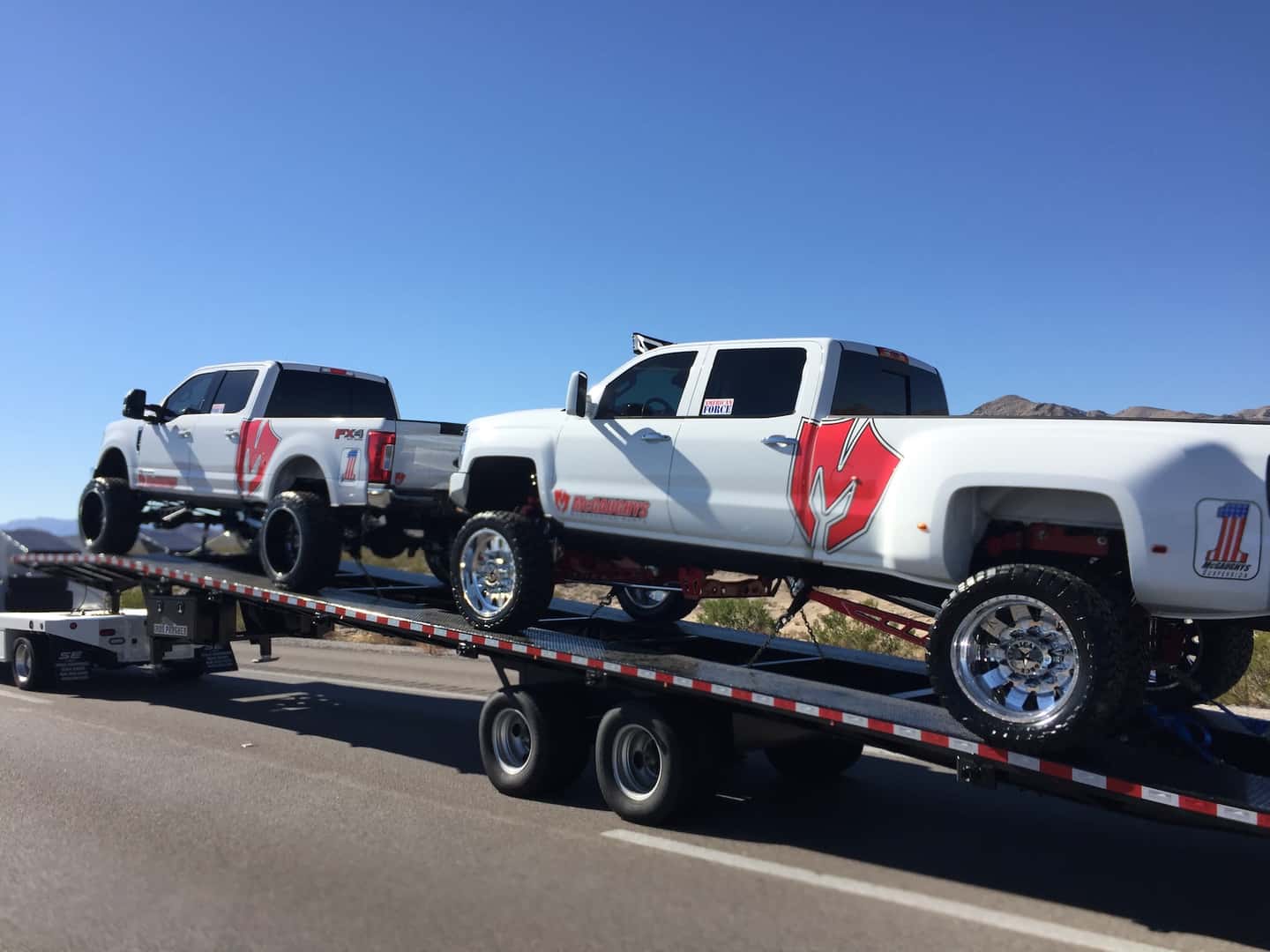
Chevrolet trucks are built to work, and for many Carson City drivers, that work includes towing. Whether you are hauling a project car, side-by-side, race vehicle, farm truck, trail rig, or another vehicle that cannot make the drive on its own, the truck doing the pulling is only part of the equation. The trailer, tie-down points, weight placement, and straps all have to do their job, too.
That is especially important in Northern Nevada, where a short tow can include freeway speeds, wind, steep grades, changing weather, and mountain roads. A Silverado may have the strength to tow a lot, but the load still needs to be secured properly for your safety and for everyone else on the road.
Start With the Right Tow Vehicle and Trailer
Before worrying about straps, make sure your tow vehicle and trailer are appropriate for the job. A properly equipped Chevrolet Silverado 1500 can be a strong fit for many towing needs, while heavier loads may call for a Chevrolet Silverado HD or even a more specialized work truck. If you are not sure which truck fits your towing plans, the team at Michael Hohl Chevrolet can help you compare setups before you buy.
Once the tow vehicle is handled, load the vehicle on the trailer with balance in mind. Too much weight too far forward or too far back can create handling problems. The vehicle should be positioned so the trailer tracks smoothly and does not feel unstable behind the truck.
Use Good Straps and Four Secure Points
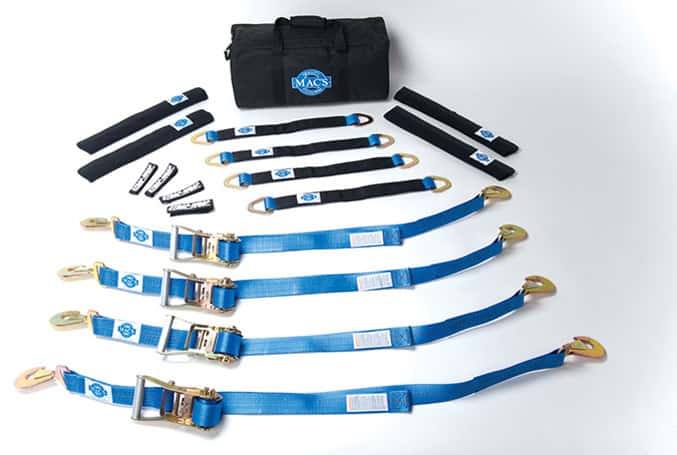
This is not the place to rely on old, frayed, sun-baked straps from the corner of the garage. Quality automotive tie-downs are worth the money. Use at least four straps, one at each corner, and inspect them before every trip. Look for cuts, weak stitching, damaged hooks, or ratchets that no longer work smoothly.
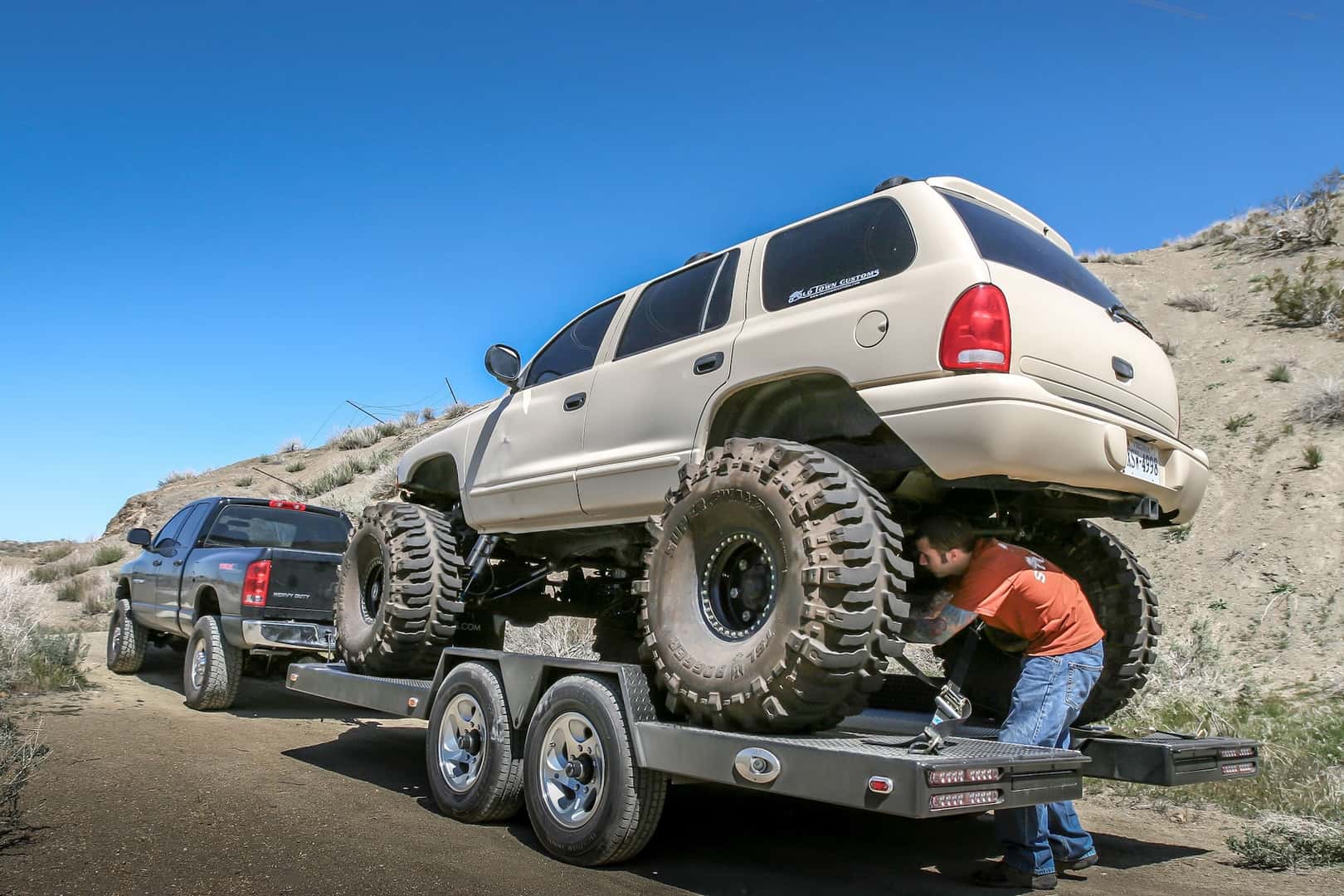
MotorTrend’s trailer tie-down tips point out that straps should attach to strong, smooth areas such as axle tubes, lower control arms, or other solid suspension points. Avoid bumpers, recovery hooks, brake lines, wiring, or sharp metal edges that could cut into a strap. The goal is to secure the vehicle firmly to the trailer without letting suspension movement loosen the straps as the trailer moves down the road.
 Straight, Tight, and Checked Often
There is some debate about crossing straps, but a straight pull is often the cleaner, more predictable setup when the trailer has proper anchor points. Keep the straps as straight as practical, tighten them evenly, and avoid leaving loose strap ends flapping in the wind. Bundle the extra length with a Velcro strap, small bungee, or another safe retainer.
Before leaving, put the towed vehicle in park or gear, set the parking brake, and double-check every strap. Also, as obvious as it sounds, make sure you have the keys to the vehicle you are towing, assuming it’s a running vehicle. You may need to move it, unlock the steering, or reposition it on the trailer. And of course, you’ll need to unload it once you arrive and ideally have some fun.
Anytime you stop, take a quick walk around the trailer and check your straps to make sure everything is still tight and secure. A fuel stop, food stop, rest stop, or quick break is a good chance to catch a loose strap, shifting load, or dangling strap end before it becomes a bigger problem.
If towing is part of your truck ownership plan, Michael Hohl Chevrolet can help you compare new Chevrolet trucks, review new vehicle specials, or contact the service department with questions about keeping your truck ready for the next haul.

0 comment(s) so far on Proper Ways to Strap a Truck to a Trailer